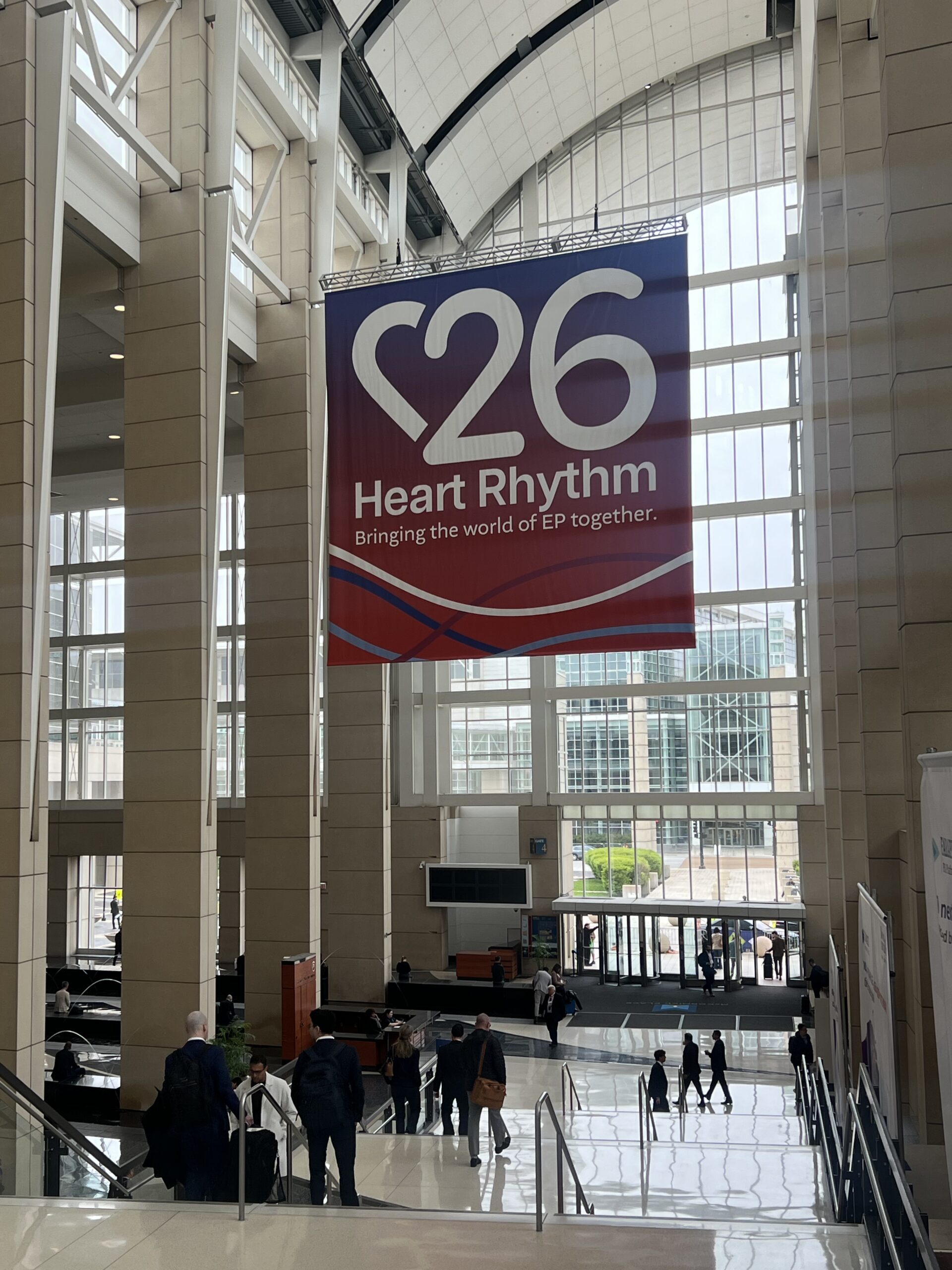



By Amber Seiler, Chief Research and Development Officer, CV Remote Solutions. Findings presented at Heart Rhythm Society 2026.
Study at a glance
- Period analyzed: September 2024 – August 2025
- Transmissions reviewed: 15,487 unscheduled transmissions
- Patient population: 6,689 patients
- Scope: Automatic device alerts, patient-initiated transmissions, clinic-requested transmissions, and other non-scheduled transmissions
- Method: Every transmission categorized by type and sub-category, then evaluated for clinical relevance (defined as a clinician-confirmed finding requiring action)
- Headline finding: 15.4% overall clinical yield; substantial variation by alert category
What is an unscheduled cardiac device transmission?
An unscheduled transmission is any cardiac implantable electronic device transmission that arrives outside of routine, scheduled follow-up. This includes automatic device-detected alerts (such as VT/VF, AF, pause, or lead-related alerts), patient-initiated transmissions, and clinic-requested transmissions. These are the transmissions that land on manufacturer portals and require triage.
What percentage of unscheduled transmissions are clinically actionable?
Across 15,487 unscheduled transmissions analyzed in this study, 15.4% contained a clinically meaningful finding. Roughly 85% were non-actionable by clinical definition.
The aggregate number, however, conceals significant variation. Clinical yield differs sharply across alert categories, and the workflow implications are different at each end of the spectrum.
Which alert types have the highest clinical yield?
The high-yield alert categories performed in line with their clinical design intent:
| Alert Type | Clinical Yield |
| VT/VF alerts | 79% |
| Pause alerts | 63% |
| AF alerts | 40% |
| Lead issue alerts | 21% |
When a device identifies one of these alerts, the probability that a clinician needs to act is high. The signal-to-noise ratio is strong, and the clinical logic is sound. These alerts deserve prioritized triage pathways and faster routes to clinical attention.
Which alert types have the lowest clinical yield?
Two categories accounted for the majority of non-actionable workload.
False ILR alerts. Implantable loop recorder alert transmissions with no clinician-confirmed arrhythmia produced a clinical yield of 0.4%. Of 1,388 transmissions in this category, 6 were clinically relevant. For every 230 false ILR alerts reviewed, approximately one was actionable.
Transmissions with no device-defined alert. 7,080 transmissions arrived without a device-detected trigger. Within that volume, 3,616 were patient-initiated. Across this entire category, clinically relevant findings were essentially absent.
Patient-initiated transmissions are not inherently problematic, they reflect engagement and appropriate use of monitoring technology. The concern is structural: when transmissions arrive without a device-detected trigger and consistently yield no actionable findings, the current workflow is generating work without generating signal.
Why does low-yield alert volume matter for clinicians?
Cardiac device clinicians and nurses carry a substantial cognitive load. Every transmission reviewed is a clinical decision: triage, interpretation, documentation, follow-up. The mental overhead compounds across hundreds of transmissions per day in busy practices.
When a single low-yield category generates a large share of the daily queue, or when high volumes of transmissions arrive without a device-detected trigger, the result is not simply inefficiency. It is a structural problem with a human cost. Burnout in remote monitoring programs is the predictable outcome of an alert ecosystem that does not treat clinical attention as a finite resource.
What can device clinics do to improve alert workflow?
The findings point to three concrete intervention levers.
Smarter alert filtering and triage. Not all alert types warrant the same response pathway. High-yield categories — VT/VF, pause, AF, and lead issues — should be prioritized for rapid clinical review. Low-yield categories warrant workflow redesign rather than reflexive review.
Vendor-level ILR algorithm refinement. A 0.4% clinical yield on false ILR alerts reflects a systems-level algorithm performance issue, not a clinic-level workflow problem. The burden of compensating for inadequate algorithm performance should not fall on clinic staff. Manufacturers should treat this category of data as actionable.
Structured patient education on symptom-triggered transmissions. If patients understand which symptoms warrant a transmission and which are better addressed through a scheduled call or message, transmission volume can be reduced without reducing engagement or access to care.
Why does this research matter for the field?
Much of the existing literature on remote monitoring burden reports aggregate workload statistics. This analysis is among the first to characterize unscheduled transmissions at the level of alert type, sub-category, and clinical yield. That granularity is what makes the findings actionable.
Broad burden statistics tell programs that the volume is too high. Yield-by-category data tells programs where to intervene.
The implication for the field is straightforward: remote monitoring workflow should be designed around what is known about alert performance, not around the assumption that more monitoring automatically produces better care. Better care means delivering the right information to the right clinician at the right time, and protecting the clinical capacity to act on it.
About this research
This analysis was conducted by the CV Remote Solutions clinical research team and presented at Heart Rhythm Society 2026. For inquiries about the methodology, collaboration on alert management workflow optimization, or remote monitoring program design, consult with a clinician here or check out our remote monitoring services.